Why Choose a Smaller Firm for Something This Serious?
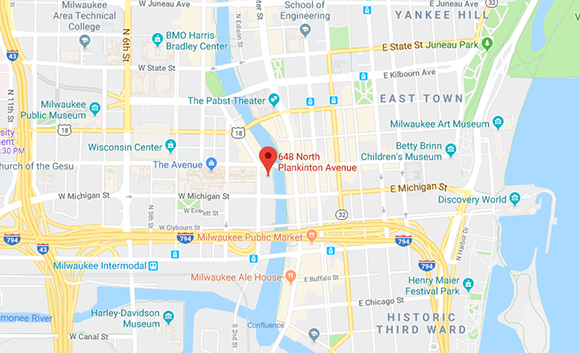
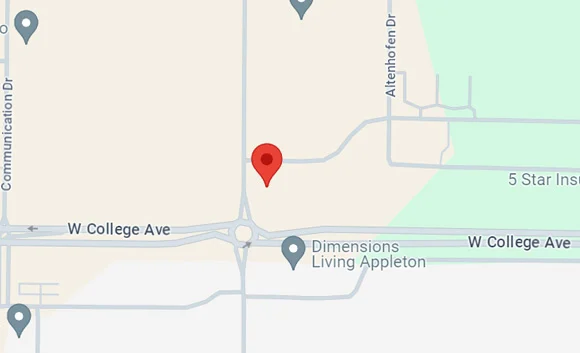
At a boutique practice, the people who evaluate your case are the same ones who see it through, so nothing gets lost in a handoff. Our Milwaukee and Appleton clients have left us 4.9- and 5.0-star ratings, and that reflects the level of personal attention a small roster makes possible.
A brain injury claim can stretch across years, so who sits across the table from you matters. You get local knowledge of Milwaukee County courts, a team that answers around the clock, and founders who treat your recovery as more than a file.
 That structure changes what happens day to day. The attorney who hears your story in the first call is the one who reads the records, sits in the depositions, and argues the value of your claim to the carrier. Nothing gets re-learned by a new person 18 months in, and no decision about your case gets made by someone who has never spoken to you.
It also changes how fast we can move. A smaller caseload means preservation letters go out in days rather than weeks, and it means we can take the time a brain injury file actually requires, because the value of these claims is built slowly and lost quickly. Call (414) 271-5300 and speak with a founder about what your case needs.
What Makes a Brain Injury Claim Harder to Prove?
A brain injury claim is harder than most because the loss is real long before the file can show it. A fracture is documented once and the record is closed. A brain injury is documented across months of visits, and the value of the claim depends on how completely that record was assembled while it was still being written.
We represent clients throughout the Milwaukee area whose early records looked unremarkable while their daily life told a different story. That gap between the paperwork and the lived reality is where a serious claim gets built or gets lost, so we start documenting it from day one.
The other difficulty is causation. The defense in these cases is rarely that nothing happened. It is that whatever the client is living with came from somewhere other than the incident, and answering that requires proof of how the person functioned beforehand.
Building the Record From Day One
 What a brain injury claim is worth depends on what the file can establish, and the strongest material is gathered early or not at all. A fall on an icy stairwell near the Historic Third Ward can support a claim as serious as a highway wreck, and the footage proving the hazard is usually gone within weeks.
The proof in these claims comes from several directions at once:
- Treating records from the day of the incident forward, gathered in full rather than in summary
- Employment, school, or military records showing how the person functioned before
- Statements from family, coworkers, and supervisors about what changed
- Scene evidence, surveillance footage, and property damage photographs
- Retained opinions from life care planners and vocational evaluators projecting future need
Wisconsin also sets a real bar on the opinion testimony these claims rely on, requiring retained witnesses to show reliable methods and grounded conclusions. Pinning all of this down early carries real weight. Speak with our Milwaukee team before the record gets away from you, and get answers today, because your consultation is free.
Documenting the Long-Term Impact of a Brain Injury
The lasting effects of a brain injury often reach into thinking, mood, and physical function all at once. The claim, however, only reflects what the file captures, and families are usually the first to notice what the records have not.
Families tend to notice the changes before the injured person does. Specifically, a spouse sees the short temper, the missed appointments, the words that stop coming, and the exhaustion that no amount of sleep touches.
The losses we document most often fall into a few groups:
- Reduced capacity for skilled, complex, or sustained work
- Loss of independence in routines the person managed easily before
- Withdrawal from hobbies, community, and family life
- Strain on marriage and relationships with children and coworkers
- The cost of help, paid or unpaid, that the household now absorbs
Because these effects can surface well after the original event, we build the record with an eye on the long arc rather than the emergency room visit alone. Gaps in that record are the most common reason a serious claim settles for less than it is worth.
How Negligence Causes Traumatic Brain Injuries
 Most of the brain injuries we handle trace back to someone’s careless choice, not bad luck. Negligence, in plain terms, means failing to act with the care an ordinary person would use. When that failure puts a head in harm’s way, the person or business responsible can be held to account.
A frequent source is a driver going too fast for the moment. Wis. Stat. § 346.57(2) bars anyone from driving faster than is reasonable and prudent for the conditions, and breaking that rule during a wreck helps establish fault. A rear-end collision on I-94 at rush hour, the kind we handle regularly in car accident cases, can cause a serious head injury even at moderate speed.
Property hazards cause their own share. Wisconsin’s safe-place law, Wis. Stat. § 101.11, requires owners of public buildings and places of employment to keep them as safe as the nature of the place reasonably allows. That is a higher standard than ordinary negligence, and it is frequently the strongest theory available in a Milwaukee premises liability case. A broken handrail, an unlit stairwell, or a puddle left standing in a grocery aisle can send a customer’s head into the floor.
Other common causes we investigate include the following:
- Distracted or impaired driving
- Falls from poorly maintained stairs, ramps, or walkways
- Falling objects at stores and commercial sites
- Negligent security leading to assaults tied to inadequate property protection
- Defective products that fail during normal use
Tracing the injury back to the specific failure that caused it decides who pays. Two sources of proof matter most:
- Physical proof from the scene: Skid marks, surveillance footage, property damage, and photographs taken before cleanup reveal what a written report misses, and we preserve it quickly because repairs happen and recordings disappear.
- Records that reveal a pattern: Earlier complaints about a damaged step, prior crashes at the same intersection, or a history of missed inspections can show the hazard was already known.
Pulling both threads together is what makes a claim an insurer has to take seriously. Find out what your case may be worth by speaking with our Milwaukee traumatic brain injury lawyers, with no obligation to move forward.
Who Is Liable for Traumatic Brain Injuries?
Liability rests with whoever’s negligence caused the harm, and often more than one party shares the blame. Identifying every responsible source early tends to decide whether a family’s future costs get covered or left on the table.
Depending on how the injury happened, responsibility may fall on:
- A negligent driver: Usually the first source of recovery, though rarely the only one, and their policy often falls short of what a brain injury costs.
- A property owner or manager: Landlords, retailers, and management companies can each carry separate responsibility for a hazard on a building or lot.
- An employer or contractor: A company can answer for a worker it directs, such as a delivery driver who runs a red light.
- A product manufacturer: When a defective helmet, ladder, or vehicle part contributes, the maker may share the blame.
Wisconsin follows a modified comparative negligence rule, codified at Wis. Stat. § 895.045, which means an injured person can still recover as long as they are not more at fault than the party they are suing. Your own share of the blame reduces the award rather than erasing it, up to that limit. That comparison is made against each defendant separately rather than against all of them together, which is one more reason adding parties can change the outcome.
 Sorting out these overlapping parties is exactly the kind of case we take on directly, with founder attention from the first call. Talk with our Milwaukee team about who may owe you, and get honest answers at no cost.
What Compensatory Damages Can You Recover for a Brain Injury?
Compensatory damages are the money meant to cover what the injury took from you, both the bills and the losses that never come with a receipt. A brain injury tends to generate both in large amounts, which is why undervaluing a claim early does so much harm. The economic damages we pursue include:
- Emergency care and hospital stays
- Past and future treatment costs
- Ongoing therapy, prescriptions, and follow-up care
- Lost wages and reduced future earning ability
- Home modifications and assistive devices
- In-home attendant or nursing care
Non-economic damages address the personal consequences of an injury that do not come with a bill or receipt. In ordinary Wisconsin negligence cases, no statutory cap limits these damages. Depending on the circumstances of your TBI, you may recover:
- Physical pain and lasting discomfort
- Emotional suffering and cognitive frustration
- Loss of enjoyment of daily life
- Strain on marriage and family relationships
In rare cases involving conduct far worse than ordinary carelessness, a third category comes into play. Wis. Stat. § 895.043 allows punitive damages when someone acted maliciously toward the injured person or in intentional disregard of that person’s rights, and a drunk driving crash is the clearest example. These punish the wrongdoer rather than compensate you, and they are not available in every claim.
Wisconsin normally caps punitive damages at twice compensatory damages or $200,000, whichever is greater. Section 895.043(6) removes that cap when the defendant was operating a vehicle while too intoxicated to drive safely, which makes a drunk driving brain injury one of the few uncapped punitive cases in Wisconsin law.
 Because a brain injury’s true cost stretches across decades, we work with life care planners and economists to project it fully rather than settle for what shows up on this month’s statements. Speak with our Milwaukee traumatic brain injury lawyers before accepting any offer, and find out what your future needs are really worth.
Put Our Milwaukee Traumatic Brain Injury Lawyers in Your Corner Today
 At Lindner Law, LLC, you are not just a case number. When you bring your case to us, you deal with our founders from the first call through the final resolution, with the individual care that has earned the trust of clients across Wisconsin. We answer around the clock, from our Milwaukee and Appleton offices, and we serve Madison traumatic brain injury clients and injured people statewide.
Call our Milwaukee office at (414) 271-5300, or our Appleton office at (920) 882-4860, for a free, no-pressure conversation about what comes next. You will talk with people who want to help, not a call center.