What Our Madison Traumatic Brain Injury Lawyers Do for You
Our approach keeps the most important work in the hands of the attorneys responsible for your case. From the first conversation, a founding attorney takes direct responsibility for your claim and remains involved through its resolution. Keeping that continuity allows us to give each case focused attention without the handoffs common at high-volume firms.
 We handle each Madison TBI claim through steps that include the following:
- Identifying every liable party, including businesses and public entities
- Preserving evidence before scenes change or footage is overwritten
- Coordinating with treating physicians on the medical timeline
- Consulting nurse planners and economists on future care costs
- Handling every insurer exchange so you are not negotiating alone
- Filing in Dane County Circuit Court when settlement stalls
- Preparing every case as if a jury will hear it
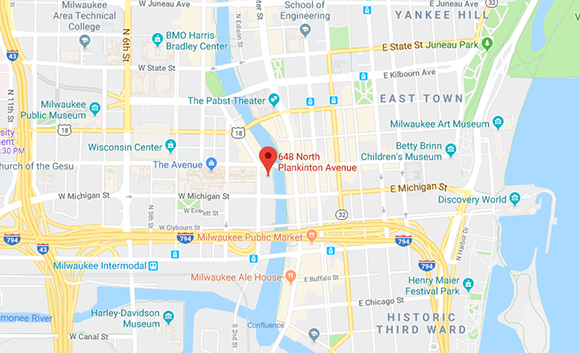
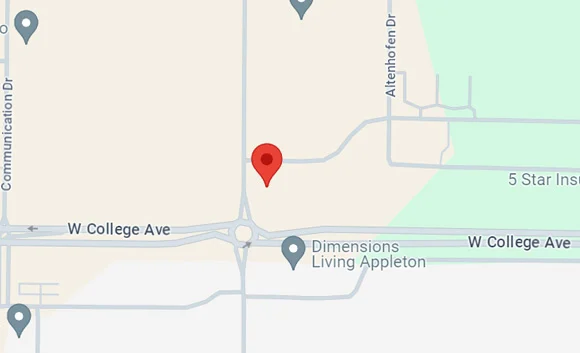
We are growing into the Madison market on the strength of the 4.9- and 5.0-star client ratings our Milwaukee and Appleton offices have earned, and we bring that same standard of service to Dane County families. Speak with us with no obligation, and see how our boutique firm approaches a serious claim.
What Causes Traumatic Brain Injuries (TBIs)?
Traumatic brain injuries almost always trace back to someone else’s careless choice, and the specific pattern shapes both the evidence and the claim. Certain accident types produce the majority of the TBI cases we handle for Dane County clients.
 The most common sources include:
- Motor Vehicle Accidents: Cars, pickups, motorcycles, and rideshare vehicles all put occupants at risk of a head injury even at moderate speeds, and passengers face the same exposure as drivers. Rideshare crashes add a coverage layer that includes the driver’s personal policy and the platform’s commercial policy, both of which need to be tapped for a serious injury.
- Commercial Truck Accidents: Semi-truck and delivery crashes generate far greater force than passenger-car collisions and usually carry substantial commercial coverage. Driver logs, federal motor carrier records, and dashcam footage supply the evidence of how the wreck occurred.
- Bicycle and Pedestrian Accidents: Cyclists and pedestrians struck by cars have no external protection, so these collisions frequently produce catastrophic claims. Madison’s bike infrastructure around the isthmus and campus draws heavy cyclist traffic, which puts a large share of Dane County’s serious injury cases on those routes.
- Drunk Driving Accidents: Crashes involving an impaired driver are often catastrophic. Wis. Stat. § 346.63 prohibits operating a motor vehicle while under the influence of an intoxicant or with a prohibited alcohol concentration, and a conviction under it becomes powerful evidence in the civil claim that follows.
- Premises Liability: Falls caused by damaged stairs, slippery floors, inadequate lighting, or icy walkways can lead to serious head injuries. When unsafe property conditions contribute to a fall, evidence of what the owner knew and whether reasonable precautions were taken can become central to a premises liability claim.
Whatever caused the injury, identifying exactly how it happened determines where the strongest evidence and available insurance coverage may be found. We trace the event back to the responsible parties, preserve the records that explain what went wrong, and connect that proof to the injury and its long-term effects.
Can I Bring a Claim if I Was a Passenger in the Vehicle?
 Passengers almost always have a claim because they bear no fault for the crash itself, and coverage can come from the driver of the vehicle you were in, the at-fault driver in the other vehicle, or both. We identify every available policy layer, including household member policies that may stack.
When Multiple Parties Share the Blame
Wisconsin permits you to pursue each party whose negligence contributed to the harm. In a commercial truck collision, fault commonly reaches the driver, the trucking company, a maintenance provider, or a shipper responsible for an overloaded trailer.
Wisconsin’s rule is modified comparative negligence, codified at Wis. Stat. § 895.045. You can recover as long as your share of the fault is not greater than that of the party you are suing, and your percentage reduces the award. That comparison is made against each defendant separately rather than against all of them combined, which is why adding parties can change the outcome and not just the size of the pot.
Sorting out those overlapping parties in the opening weeks of a case expands the total insurance available and puts real recovery within reach. Find out what your case may be worth with no strings attached.
How Are TBI Claims Proved in Wisconsin?
 A brain injury claim is proved through the record, and the earliest entries usually carry the most weight. What the treating providers documented in the first hours becomes the baseline every later opinion refers back to, which is why a thin initial record is difficult to repair afterward.
The proof in these cases is assembled from several directions at once:
- Emergency and treating records from the day of the incident forward
- Imaging and testing ordered by the treating providers, gathered in full rather than in summary
- Employment and academic records showing how the person functioned before the injury
- Statements from family, coworkers, and supervisors about what changed
- Retained opinions from planners and vocational evaluators projecting future need
Wisconsin also sets a real bar on the opinion testimony these claims depend on, requiring that retained witnesses show reliable methods and grounded conclusions. Getting a complete evaluation early helps establish the nature and extent of the injury, and we work with treating providers to build a record that accurately reflects the client’s condition.
Documenting the Long-Term Impact of a Brain Injury
A brain injury can change everyday life in ways that unfold gradually and last for years, and the claim only reflects what the file captures. Our Madison TBI claims document effects such as:
- Reduced capacity for skilled, complex, or sustained work
- Loss of independence in routines the person managed easily before
- Reduced participation in hobbies, community, and family life
- Strained relationships with spouses, children, and coworkers
- The cost of help, paid or unpaid, that the household now absorbs
Documenting these effects as they develop creates the history needed to support the claim. Gaps in the record are the most common reason a serious claim settles for less than it is worth.
A detailed record of lasting limitations also does double duty. It strengthens the damages case, and it makes it harder to attribute the client’s current condition to something unrelated to the incident.
How Insurers Approach TBI Claims
Brain injury claims draw close scrutiny because the numbers are large and the proof is built over time rather than captured at once. A serious TBI can produce a seven-figure demand, and every element of it gets tested.
Patterns we see repeatedly in Dane County claims:
- Downplaying symptoms that lack visible imaging findings
- Requesting recorded statements before the treating providers have finished their workup
- Attributing cognitive problems to age, stress, or pre-existing conditions
- Extending the claim timeline well past what the file requires
- Combing social media for posts that suggest a normal life
- Sending premature settlement offers before treatment stabilizes
- Requiring an examination by a physician the carrier selects
Every one of these moves puts pressure on the client at the moment they have the least leverage. Bringing us into the conversation early takes those pressure points off the table. Get answers today, because your first consultation costs nothing.
What Should I Do Immediately After a Head Injury?
 Seek medical care the same day, even if you initially feel capable of carrying on, because an early visit creates the medical record the claim will be built on. If possible, photograph the scene and collect witness contact information, then avoid giving a recorded statement to the other party’s insurer before speaking with an attorney.
Types of Compensation Available for TBI Cases
A brain injury claim can recover multiple categories of damages, and honest valuation means accounting for each one. Wisconsin law allows compensation for the financial losses, the human toll, and, in specific circumstances, punishment of reckless conduct.
Economic Damages
Economic damages cover the financial losses tied to your injuries: medical care, lost wages, reduced future earning capacity, home modifications, and paid or family caregiver costs. Every item has a bill or a documented projection behind it.
Non-Economic Damages
Non-economic damages in your claim compensate for pain, cognitive frustration, lost enjoyment of activities, and the strain a brain injury places on your family life. Juries weigh these based on evidence of how the injury changed your daily life and ability to work.
Punitive Damages
Cases involving genuinely reckless conduct, such as a driver with multiple prior OWI convictions choosing to drive again, can support damages meant to punish rather than compensate. Wis. Stat. § 895.043 permits them where a defendant acted maliciously toward the injured person or in intentional disregard of that person’s rights.
Wisconsin normally caps punitive damages at twice compensatory damages or $200,000, whichever is greater. Section 895.043(6) removes that cap entirely when the defendant was operating a vehicle while too intoxicated to drive safely, which makes a drunk driving TBI one of the few uncapped punitive cases in Wisconsin law.
Wrongful Death Benefits
When a TBI proves fatal, Wis. Stat. § 895.03 creates the wrongful death cause of action, brought by the personal representative, meaning the person appointed to act for the estate. Recovery includes loss of society and companionship, loss of financial support, medical and funeral costs, and any pain the person suffered before death.
A companion statute, Wis. Stat. § 895.04, decides who actually receives that recovery, running first to a surviving spouse or domestic partner, then to lineal heirs, then to brothers and sisters. Section 895.04(4) also caps loss of society and companionship at $350,000 when an adult dies and $500,000 when a child dies.
Call for a free case review today, and let us walk through which categories apply to your file.
How Long Do I Have to File a Traumatic Brain Injury Lawsuit in Wisconsin?
Most Madison, Wisconsin personal injury lawsuits, including TBI claims, must be filed within three years of the date of injury under Wis. Stat. § 893.54. Two exceptions matter here. Section 893.54(2m) cuts the deadline to two years when the claim is for a death arising from a motor vehicle crash, and a claim against a city, county, or other governmental body requires written notice within 120 days under Wis. Stat. § 893.80, where recovery is also capped at $50,000.
Deadlines can also run differently for an injured child, so confirm your specific date with counsel early rather than assuming the three-year rule applies.
Protect Your Claim With Our Madison Traumatic Brain Injury Lawyers Today

Brain injury claims lose value with every week that treatment records go unpulled and insurance letters go unanswered. Lindner Law, LLC is ready to step in the moment you call, and a founding attorney will personally take on your Madison case. We serve Dane County and every corner of Wisconsin from our Milwaukee and Appleton offices, around the clock.
Reach us at (414) 271-5300 in Milwaukee or (920) 882-4860 in Appleton any hour of the day, and we will begin protecting your claim from the first conversation. There is no charge for the call, and no obligation to move forward with your case.