Why Fox Valley Families Trust Our Appleton Traumatic Brain Injury Lawyers
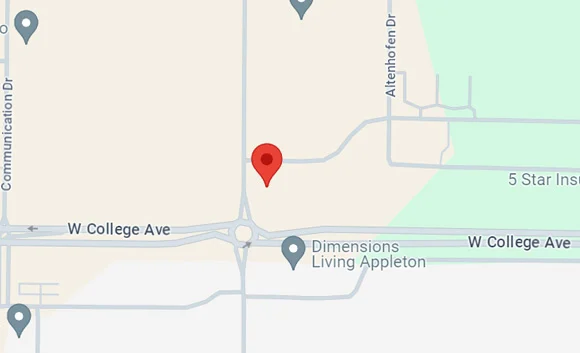
We built our Appleton office on a simple idea: the biggest legal matter of your life should get the founder’s attention, not a handoff to someone reading the file for the first time. A boutique caseload is the reason we can do that. Every brain injury client here works with the same small team from intake through resolution.
 That approach shows up in the small things and the large ones alike. It includes:
- Direct phone access to our founding attorneys
- 24-hour availability from both Appleton and Milwaukee
- Personal case updates rather than form emails
- Consistent representation from first meeting through settlement or verdict
- Local knowledge of Outagamie County Circuit Court practice
Our Appleton office holds a five-star rating on Google, which reflects the level of care we build into each case. Call for a free case review today and see the difference for yourself.
What Makes Traumatic Brain Injury Cases More Complex?
Brain injury claims run harder than most personal injury cases because the proof is built rather than photographed. A fracture is documented once and the file moves on. A brain injury claim is documented over months, and the value of the claim depends on how completely that record was assembled while it was still being created.
Proof takes shape across specialties. Records from primary care, treating specialists, and rehabilitation providers each supply a piece, and the pattern only becomes visible when they sit side by side. That is why an early settlement offer is almost always made before the record can support what the claim is actually worth.
Causation is the second battleground. The defense in these cases is rarely that nothing happened; it is that whatever the client is living with came from somewhere other than the crash. Answering that requires a documented baseline of how the person functioned before the injury, which is evidence most families do not think to gather.
 Wisconsin also imposes a higher bar on the opinion testimony that carries these cases. Retained physicians, planners, and vocational evaluators must show their methods are reliable and their conclusions grounded.
The disclosure schedule set by the Outagamie County Circuit Court gives little room for a late-forming record. Speak with our Appleton traumatic brain injury lawyers early, because the medical timeline drives the legal one.
How Are Brain Injury Claims Undervalued?
Brain injury claims lose value when decisions get made before the record is complete, and several familiar patterns produce that result. Spotting those patterns early can protect the value of a claim. Our attorneys look for several common moves:
- Requesting a recorded statement in the first week, before the treating providers have finished their workup
- Offering a quick settlement that covers the emergency room bill and little else
- Treating an unremarkable initial scan as proof that the claim is minor
- Combing social media for posts that appear to show a normal life
- Attributing the client’s current limitations to age, prior injuries, or unrelated events
Each tactic applies pressure before you have a complete picture of your injury or claim. Having counsel handle those exchanges can keep an early decision from undermining the compensation available later.
Wisconsin puts some pressure back the other way. Under Wis. Stat. § 628.46, an insurance claim is overdue if it is not paid within 30 days of written notice, and overdue amounts carry statutory interest.
 That provision is narrower than it first appears. Wisconsin courts apply it to a claim against another party’s insurer only where liability is not genuinely in question, the damages are a sum certain, and the claimant has given written notice of both. We evaluate whether a file can be positioned to meet those conditions rather than assuming the interest clock runs on its own.
Find out what your case may be worth by talking with our Appleton attorneys, with no obligation to move forward.
How Are the Long-Term Costs of a Brain Injury Calculated?
How traumatic brain injury claims are valued starts with pricing a brain injury claim honestly, meaning projecting what care will cost across the client’s remaining years, not just tallying the bills received to date. That figure often runs into six or seven figures for a serious brain injury, because the projected care reaches across specialties and decades.
The calculation begins with a life care plan prepared by a certified nurse planner. Treating physicians outline anticipated needs, and the planner assigns each one a frequency and current market cost. An economist then projects those expenses over the person’s lifetime and reduces the total to present value while accounting for inflation and life expectancy.
 Cost categories we routinely include:
- Recurring treatment and prescription costs: The follow-up care, therapy, and periodic reassessment that continue long after the initial hospitalization make up the steady spend in most of these plans. These figures are drawn from Fox Valley provider rates, not national averages.
- Support and household costs: Attendant care, home modifications, transportation help, and lost household services have measurable financial value even when relatives provide the assistance without pay. Wisconsin juries may consider the reasonable local cost of replacing those services.
The state does not cap non-economic damages in ordinary negligence cases, which matters when the injury steals your ability to enjoy work, hobbies, and family life. Get answers today, because your first consultation costs nothing.
Compensation Available in Wisconsin TBI Claims
A brain injury claim seeks money for what the injury took, in three broad categories: economic losses with a paper trail, non-economic losses that cover the human toll, and, in rare cases, punitive damages against especially reckless conduct.
Economic damages we build into a claim include:
- Past and future medical treatment
- Lost wages during recovery
- Loss of future earning capacity
- Assistive equipment and home modifications
- Costs of paid or family caregivers
Non-economic damages account for harm that isn’t visible with receipts and medical bills. These losses commonly include:
- Chronic physical pain
- Emotional suffering
- Changes that strain a marriage or a parent-child relationship
- Lost enjoyment of meaningful activities
- Frustration and loss of independence in daily life
Juries evaluate these losses by looking at how the injury has altered everyday life.
When a TBI results in death, Wisconsin law permits surviving family members to pursue a wrongful death claim. Wis. Stat. § 895.04 outlines who may recover and limits loss-of-society damages to $500,000 for a deceased minor and $350,000 for a deceased adult. A wrongful death claim can run alongside a survival action, which is the separate claim the estate brings for what the injured person went through between the injury and the death.
Speak with our Appleton attorneys before signing any release, and let us walk through what your claim should actually be worth.
Personal Injury Accidents That Cause TBIs
Almost any incident that jolts or strikes the head can cause a brain injury, and the ones we see most often in Appleton fall into a handful of recognizable patterns. Every one involves someone else’s careless choice, which is what opens the door to a civil claim.
Common sources of the TBI cases we handle:
- Motor vehicle crashes
- Motorcycle and bicycle collisions
- Slip and fall incidents
- Falls from broken stairs, unlit walkways, or defective handrails
- Pedestrian strikes
- Falling objects at retail and commercial sites
- Dog bites and attacks
Many motor vehicle crashes begin with a driver’s decision to stop paying full attention to the road. Wis. Stat. § 346.89 prohibits inattentive driving that interferes with safe vehicle operation and separately restricts composing or sending electronic messages while driving. Evidence that a driver violated the statute when the crash occurred can help support negligence in a civil claim.
Who Is Liable in Appleton Brain Injury Cases?
 Liability rests with whoever’s negligence caused the injury, and pinning that down early shapes everything that follows. Wisconsin follows a modified comparative negligence rule, set out at Wis. Stat. § 895.045. You can recover as long as your share of the fault is not greater than that of the party you are suing, that comparison is made against each defendant separately, and your percentage reduces the final award.
Parties who may bear responsibility in a TBI case include the following:
- The at-fault driver in a motor vehicle crash
- A property owner or manager where a fall occurred
- An employer whose worker caused the harm on the job
- A trucking company or its insurer in a commercial vehicle wreck
- A product manufacturer when a defective part contributed
- A bar or restaurant that overserved a drunk driver
- A landlord who ignored known security or maintenance problems
Some cases reach into public entities, and those follow rules that can end a claim before it starts. Under Wis. Stat. § 893.80, written notice of the circumstances of the claim must reach the governmental body within 120 days of the event, and an itemized claim must be presented and disallowed before suit.
The harder limit is the money. Section 893.80(3) caps recovery against a political corporation or governmental subdivision at $50,000, no matter how catastrophic the injury. A brain injury worth seven figures against a private defendant may be worth $50,000 against a town, which changes the entire strategy of the case.
Winter falls carry one more rule. Wis. Stat. § 893.83 bars a claim against a city, village, town, or county for injuries from snow or ice on a bridge or highway unless the accumulation had been there for three weeks, which matters in a Fox Valley winter more than almost anywhere else.
Bringing every responsible party into the claim expands the available insurance and makes full recovery more realistic. Speak with our Appleton lawyers with no obligation, and let us map out who may owe you.
Get Immediate Help From Our Appleton Traumatic Brain Injury Lawyers

A brain injury claim gets stronger with every week the record is properly built and weaker with every week it is not. When you retain Lindner Law, LLC, that work starts the moment we open your file. Our founding attorneys personally answer the phone in the Fox Valley, and we begin protecting your claim from the first conversation.
Reach our Appleton office at (920) 882-4860 any hour, any day. You will speak with a real attorney who wants to hear your story, not a screening service, and the call costs nothing.