Our founders personally manage catastrophic injury cases from the initial call through resolution. The decisions made early about medical documentation and expert retention shape the entire value of the claim, and those decisions require attorney-level judgment from the start.
What Sets Our Approach Apart
 When you hire Lindner Law for a catastrophic injury case, you speak directly with our founders—the attorneys personally managing your case from the initial call through resolution. You are not passed through layers of staff or treated like a number, as can happen at high-volume billboard firms.
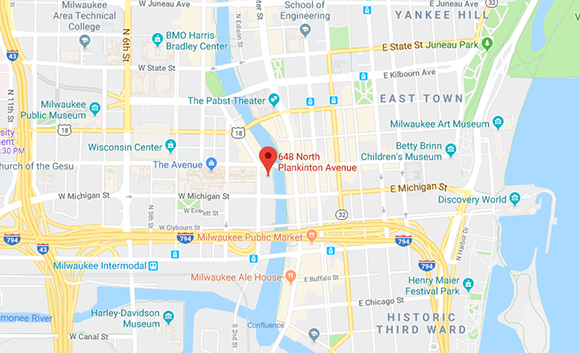
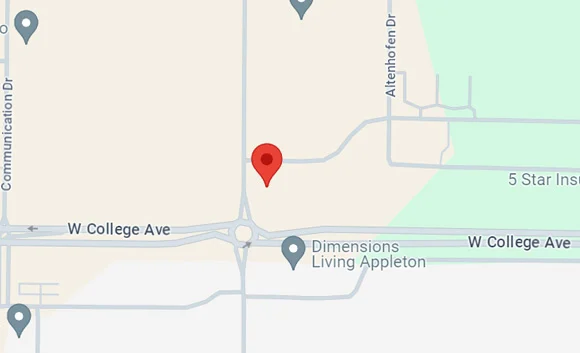
Clients have recognized that personal approach with a 4.9-star rating based on 403 reviews in Milwaukee and a 5-star rating based on 138 reviews in Appleton. From our Milwaukee headquarters and Appleton office, we represent people with catastrophic injuries throughout Wisconsin.
What Makes a Catastrophic Claim Different
A standard injury claim might involve six months of physical therapy and a few thousand in medical bills. A catastrophic claim might involve attendant care, home modifications, and lost earning capacity stretching across the injured person’s remaining life.
The legal strategy, expert requirements, and negotiation dynamics all shift when future damages dwarf the current medical expenses.
What Qualifies as a Catastrophic Injury?
The term catastrophic injury generally refers to injuries that produce long-term or permanent disability substantially affecting a person’s ability to live, work, or function independently.
 While Wisconsin does not use a single uniform definition across all personal injury claims, specific statutes, insurance provisions, or specialized legal contexts may define or apply similar terminology.
Milwaukee catastrophic injury claims commonly involve these types of harm:
- Traumatic brain injuries (TBI) ranging from severe concussions to permanent cognitive impairment
- Spinal cord injuries resulting in partial or complete paralysis
- Amputation or permanent loss of use of a limb
- Severe burn injuries requiring long-term reconstructive surgery
- Multiple fractures or crush injuries requiring extensive rehabilitation
The common thread is that recovery is measured in years or decades, not weeks. That timeline drives every aspect of how the claim is built and valued.
How Milwaukee’s Urban Environment Creates Catastrophic Injury Risk
Milwaukee’s heavy interstate traffic along I-94 and I-43, commercial trucking routes through the Menomonee Valley, aging building infrastructure in the Third Ward and Walker’s Point, and downtown construction activity create conditions where catastrophic injuries happen in repeating patterns.
Pedestrian injuries near the Marquette Interchange, falls on commercial property along Wisconsin Avenue and Water Street, and high-speed collisions on the Zoo Interchange corridor all produce the kinds of severe injuries that require focused legal attention.
What Damages May a Milwaukee Catastrophic Injury Claim Recover?
 Catastrophic injury damages in Wisconsin may include both current losses and projected future expenses spanning the rest of the injured person’s life.
Wisconsin’s modified comparative negligence rule under Wis. Stat. § 895.045 may reduce damages based on the injured person’s share of fault and may bar recovery depending on how fault is allocated among the parties.
Current and Future Damages in Catastrophic Cases
Damage Category | What It Covers | Time Horizon |
Past medical expenses | Emergency care, surgery, hospitalization, rehabilitation already completed | Date of injury to present |
Future medical expenses | Projected surgeries, therapy, medications, assistive devices, home health care | Present through life expectancy |
Lost wages | Income lost from date of injury through present | Date of injury to present |
Lost earning capacity | Reduction in future earning ability due to permanent impairment | Present through expected working life |
Pain and suffering | Physical pain and emotional distress from the injury | Past and ongoing |
Loss of enjoyment of life | Inability to participate in activities the person engaged in before injury | Ongoing |
Home and vehicle modifications | Wheelchair ramps, accessible bathrooms, modified vehicles | As needed over lifetime |
Building a strong future-damages case requires medical testimony, a life care plan, and vocational and economic analysis. The next section explains how life care plans work and why insurers contest them.
What Role Do Life Care Plans Play in Milwaukee Catastrophic Injury Cases?
A life care plan projects the injured person’s medical, therapeutic, and support needs for the remainder of their life. In Milwaukee catastrophic injury cases, the life care plan often becomes the single most contested piece of evidence.
Life care planners evaluate the injured person’s current condition and project future needs. A thorough plan typically addresses:
- Ongoing medical treatment including specialist visits, medications, and monitoring
- Physical, occupational, and cognitive therapy projected through life expectancy
- Attendant care or home health aide hours based on the level of daily assistance required
- Durable medical equipment replacement schedules for wheelchairs, prosthetics, or communication devices
- Home modifications, vehicle modifications, and transportation needs
The life care plan translates medical limitations into dollar figures. An economist then calculates the present value of the lifetime cost, adjusted for inflation and discount rates.
How the Defense Challenges These Projections
Insurance companies rarely accept a plaintiff’s life care plan without challenge. Defense teams retain their own planner and economist to produce competing projections.
The dispute often centers on whether the injured person’s condition may improve, whether cheaper alternatives exist, and whether projected attendant care hours are medically necessary.
The strength of the original plan, the credentials of the planner, and the supporting medical documentation all determine how well the projections hold up under cross-examination or during
settlement negotiations.
 If the insurer has already made an offer on your catastrophic injury claim, consider speaking with an attorney before responding. Call Lindner Law at (414) 271-5300.
How Does Wisconsin’s Comparative Negligence Rule Affect Catastrophic Injury Claims?
Wisconsin follows a modified comparative negligence rule commonly called the 51% bar. You may recover compensation only if you are less than 51% at fault. If you are eligible to recover, your damages are reduced by your percentage of fault.
For example, if your total damages are $1 million and you are found 20% at fault, your recovery may be reduced to $800,000. If you are found 51% or more at fault, you cannot recover.
How Fault Allocation Works in Multi-Party Cases
When several people or businesses may share responsibility, fault allocation becomes more complicated. Wisconsin law compares the injured person’s negligence with the negligence of the party from whom recovery is sought, so the result may differ from one defendant to another.
The distribution of fault among defendants, non-parties, and the injured person can affect both the amount recoverable and which parties are responsible for paying it.
These issues are especially important in catastrophic injury cases, where even a small shift in fault percentages may change the value of the claim substantially.
What Types of Accidents Cause Catastrophic Injuries in Milwaukee?
Catastrophic injuries in Milwaukee arise from several categories of incidents, and the type of accident affects both the legal theory and which parties may bear liability.
Motor Vehicle Collisions
High-speed crashes on I-94 through downtown Milwaukee, the Zoo Interchange, and the Marquette Interchange produce some of the most severe injury cases in the county. Commercial truck collisions along the Menomonee Valley corridor add complexity because federal motor carrier safety regulations and corporate liability may extend the claim beyond the driver.
Premises Liability
Lindner Law has deep experience with premises liability, which is our firm’s area of particular focus.
Falls from defective stairways in Milwaukee’s older apartment buildings, inadequate security at commercial properties, and dangerous conditions at construction-adjacent retail sites all may produce catastrophic outcomes.
Wisconsin premises liability law generally requires property owners and occupiers to exercise reasonable care under the circumstances, taking into account factors such as control over the property, notice of dangerous conditions, and the nature of the hazard.
Wisconsin’s safe-place statute, Wis. Stat. § 101.11, may also apply to certain buildings and structures frequented by the public, imposing a heightened duty of care.
How Long Do You Have to File a Catastrophic Injury Claim in Wisconsin?

The general statute of limitations for personal injury claims in Wisconsin is three years under Wis. Stat. § 893.54. However, the accrual date and applicable deadline may vary based on the type of accident and the parties involved.
Deadlines That May Differ
Claims against local government bodies involve procedural requirements that go beyond a single deadline, but generally include a notice-of-claim requirement under Wis. Stat. § 893.80.
That statute involves additional requirements related to claim presentation, timing, and statutory exceptions. Claims involving state employees or property may fall under Wis. Stat. § 893.82, which carries its own procedural rules.
Starting the legal process months or years after the injury gives the defense time to secure favorable evidence while physical evidence, witness memory, and surveillance footage deteriorate.
 Catastrophic injury claims reward preparation and punish delay. The quality of your life care plan, the strength of your expert testimony, and how thoroughly your attorney documents your long-term needs all determine whether the final number reflects reality or falls short.
Early case evaluation gives your legal team time to build that foundation before the defense locks in its position.
Call Lindner Law at (414) 271-5300 in Milwaukee or (920) 882-4860 in Appleton at any hour, any day. We review catastrophic injury cases at no cost for the initial conversation.
This page provides general information about catastrophic injury claims in Wisconsin. It is not legal advice and does not create an attorney-client relationship. Each case involves unique facts and circumstances. Contact Lindner Law directly to discuss your specific situation.