Fault in a Wisconsin pedestrian accident depends on which party failed to meet their legal duty of care. In many cases, both the driver and the pedestrian share some degree of responsibility.
Pedestrian accident fault in Wisconsin gets assigned through Wisconsin’s modified comparative negligence framework, which means partial fault on your part doesn’t necessarily end your claim.
If you or a family member was hurt in a Milwaukee, WI pedestrian accident and you’re trying to make sense of what the insurer is telling you, speaking with a Wisconsin pedestrian accident attorney at no cost is a reasonable first step before anything else is decided.
Who is responsible if a car hits a pedestrian in Wisconsin?
In most Wisconsin pedestrian accidents, the driver bears primary responsibility because drivers have a legal duty to watch for pedestrians and yield the right of way in crosswalks and other designated areas. However, that’s not always the case:
- A pedestrian who crosses against a signal, jaywalks, or steps into traffic unexpectedly may be assigned a share of fault, which reduces their recovery proportionally.
- If a pedestrian is found 51% or more at fault, Wisconsin’s 51% bar rule eliminates recovery entirely.
Fault in Wisconsin pedestrian accidents gets determined through evidence, not assumptions, and insurers regularly push back on liability even when driver negligence seems obvious.
Key Takeaways: Fault in Wisconsin Pedestrian Accident
- Wisconsin’s 51% bar rule means pedestrians who are found more than half at fault for their own accident recover nothing, which is why insurers routinely try to push fault percentages as high as possible.
- Drivers in Wisconsin owe pedestrians a duty of care at crosswalks and in other locations where pedestrian presence is reasonably foreseeable, regardless of whether a marked crosswalk exists.
- Jaywalking in Wisconsin doesn’t automatically bar a pedestrian’s recovery; it may increase their assigned fault percentage, but drivers still have a duty to avoid hitting someone they could have seen.
- The evidence that establishes or counters fault arguments, including surveillance footage, witness statements, police reports, and accident reconstruction, degrades quickly and requires prompt action to preserve.
- Insurance company fault determinations aren’t final; they reflect the insurer’s position, not a court’s finding, and an attorney can challenge those determinations with the right evidence.
How Does Wisconsin Law Assign Fault in Pedestrian Accidents?
Pedestrian accident fault in Wisconsin isn’t determined by a single factor. Courts and insurers look at traffic laws, driver behavior, pedestrian conduct, road conditions, lighting, and the physical layout of the accident scene.
Wisconsin’s 51% Bar Rule and What It Means for Pedestrians
Wisconsin’s modified comparative negligence rule allows pedestrian accident victims to recover damages as long as they were less than 51% at fault for the accident.
If a court or jury finds the pedestrian 51% or more responsible, recovery is barred entirely. Below that threshold, the pedestrian’s total recovery is reduced proportionally by their fault percentage.
For example, a pedestrian found 30% at fault in a case valued at $200,000 recovers $140,000. That same pedestrian found 55% at fault recovers nothing.
The insurer’s strategy in many pedestrian accident cases is to gather evidence and build arguments that push the pedestrian’s fault percentage above 50%, because doing so eliminates the entire claim.
Understanding that dynamic helps explain why insurers move so quickly to investigate these accidents and why early legal representation matters.
How Drivers’ Duties of Care Apply to Pedestrian Accidents
Wisconsin law requires drivers to exercise reasonable care to avoid hitting pedestrians in all circumstances, not just in marked crosswalks. That duty extends to situations where a driver should reasonably anticipate pedestrian presence, including near schools, residential neighborhoods, bus stops, and commercial areas with significant foot traffic.
Specific driver obligations include yielding to pedestrians in crosswalks, reducing speed in pedestrian-heavy areas, and maintaining enough attention to react to pedestrians who enter the road unexpectedly.
A driver who is texting, speeding, running a red light, or driving with impaired visibility carries a heavy share of fault regardless of what the pedestrian was doing at the moment of impact.
What Role Does Pedestrian Conduct Play in Fault?
Pedestrian conduct affects fault allocation in Madison, Wisconsin pedestrian accident cases, but it rarely tells the complete story the insurer presents. Crossing outside a crosswalk, walking against a signal, or stepping into traffic without looking are all behaviors that can increase a pedestrian’s assigned fault percentage.
None of them automatically bars recovery, and none of them erases a driver’s independent legal duty to avoid hitting a person they could see or should have seen.
How Does the Right of Way Affect Fault Determination?
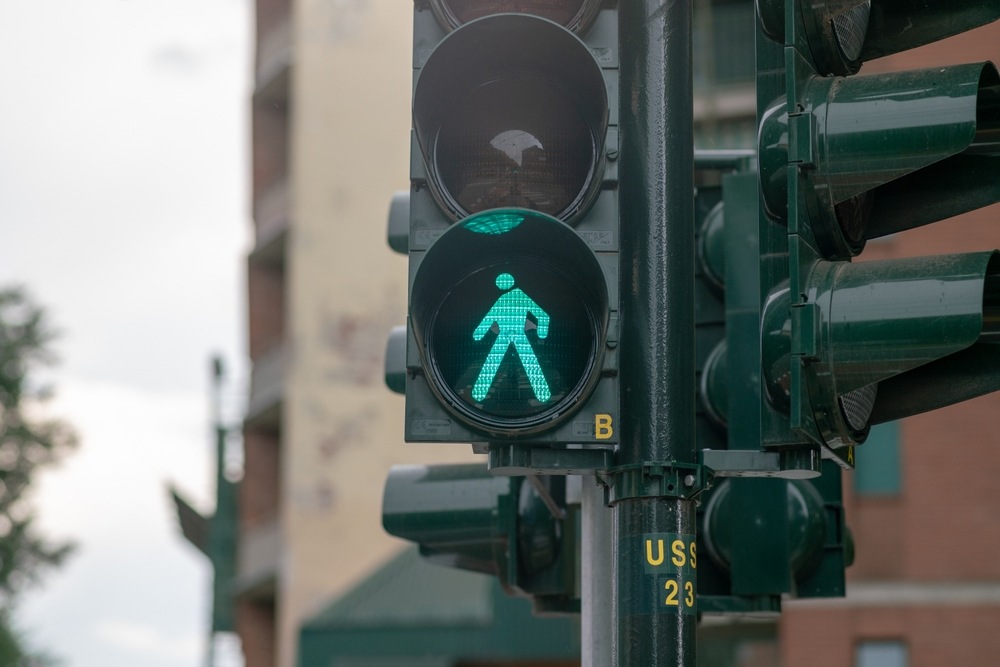
Wisconsin law gives pedestrians the right of way in marked crosswalks and at intersections where crosswalk markings exist. Drivers who fail to yield when a pedestrian is lawfully crossing carry the primary fault for any resulting accident.
However, the right of way is not absolute. Pedestrians can’t simply step off a curb into moving traffic and assume protection. Wisconsin law requires pedestrians to exercise reasonable care for their own safety even when they have the technical right of way.
The right of way question often becomes contested in cases involving mid-block crossings, unmarked intersections, and pedestrians who enter a crosswalk while the signal is already changing.
In those situations, the physical evidence of vehicle speed, driver reaction time, and where the pedestrian was when the driver first had an opportunity to see them all affect how fault gets distributed.
Crosswalk Accidents: How Does Liability Work in Wisconsin?
Crosswalk accident liability in Wisconsin generally favors pedestrians, but the outcome of a specific case depends on the circumstances of the crossing and the evidence available to reconstruct what happened.
Drivers who hit pedestrians in marked crosswalks typically bear the dominant share of fault, but the analysis doesn’t stop there.
When Drivers Bear the Majority of Fault at Crosswalks
Drivers turning at intersections while failing to check for pedestrians in the crosswalk are among the most common causes of crosswalk accidents. A driver focused on gap acceptance in oncoming traffic, rather than on the pedestrian lane crossing in front of them, creates predictable and preventable accidents.
That inattention carries significant legal weight in Wisconsin fault analysis.
Similarly, drivers who approach crosswalks at speeds that don’t allow them to stop safely if a pedestrian enters carry fault even when the pedestrian steps in quickly. Wisconsin law doesn’t excuse a driver from failing to maintain a speed consistent with conditions.
When Pedestrian Conduct Affects Crosswalk Liability
Pedestrians who enter a crosswalk against a Don’t Walk signal, who step off the curb suddenly in a location where a driver had no reasonable opportunity to stop, or who are crossing while significantly distracted may carry a share of fault in a crosswalk accident.
That fault percentage affects recovery under Wisconsin’s comparative negligence framework but doesn’t automatically eliminate it.
The key question Wisconsin courts examine is whether both parties exercised the care a reasonable person would exercise under the circumstances. Fault allocation in crosswalk accidents frequently requires accident reconstruction, timing analysis of traffic signals, and review of any available surveillance footage from nearby businesses or traffic cameras.
Does Jaywalking Bar a Pedestrian’s Recovery in Wisconsin?
Jaywalking in Wisconsin doesn’t automatically bar a pedestrian’s right to recover damages, but it does affect how fault gets assigned.
Jaywalking laws and Wisconsin accidents intersect with comparative negligence in a way that surprises many people, because the common assumption is that crossing outside a crosswalk eliminates any legal claim. That assumption is wrong.
What Jaywalking Actually Does to a Wisconsin Pedestrian Claim
A pedestrian who crosses mid-block or against a signal may be assigned a higher fault percentage than one who was crossing lawfully. How much higher depends on the driver’s behavior, the road conditions, the visibility at the scene, and whether the driver had a reasonable opportunity to see and avoid the pedestrian.
A driver traveling at 45 mph through a residential area who hits a jaywalker they could have seen from 200 feet away doesn’t escape liability simply because the pedestrian wasn’t at a crosswalk.
Wisconsin courts have consistently applied the principle that drivers must exercise reasonable care to avoid hitting pedestrians even when those pedestrians are crossing unlawfully. The pedestrian’s fault for jaywalking is a factor in the comparative negligence calculation, not a complete defense for the driver.
How Insurers Use Jaywalking Arguments
Insurers in pedestrian accident cases frequently lead with jaywalking arguments because they’re easy to assert and often effective at discouraging injured people from pursuing claims.
The response to those arguments requires evidence: surveillance footage showing the driver’s speed and sight lines, expert analysis of stopping distances, and documentation of road conditions and lighting.
A focused attorney who has handled pedestrian accident cases knows how to build that counter-narrative.
How Is Fault Actually Proven in a Wisconsin Pedestrian Accident Case?
Proving a pedestrian accident claim in Wisconsin requires more than a police report and a statement from each party. Fault determination in pedestrian accident cases draws on multiple categories of evidence, and the quality of that evidence often determines whether a case settles fairly or goes sideways.
The Evidence That Shapes Fault Allocation
Several forms of evidence consistently affect fault determinations in Wisconsin pedestrian accident cases. The police report establishes the initial record of what each party reported at the scene, which traffic laws may have been violated, and whether any citations were issued.
However, police reports aren’t conclusive on the question of civil liability, and attorneys regularly challenge their conclusions with additional evidence.
Surveillance footage from traffic cameras, business security systems, and residential doorbells has become one of the most significant sources of evidence in pedestrian accident cases.
Footage that shows vehicle speed, driver behavior leading up to impact, and the pedestrian’s location and actions at the time of the accident can resolve disputed fault questions that would otherwise require a jury to decide.
Accident reconstruction analysis matters in higher-speed cases and situations where the physical evidence, including skid marks, vehicle damage patterns, and point of impact, tells a different story than either party’s account.
Why the Insurer’s Fault Determination Isn’t the Final Word
The at-fault driver’s insurer makes an internal fault determination early in the claims process, and that determination shapes their settlement position. Many injured pedestrians accept that determination as settled fact. It isn’t. The insurer’s assessment reflects their interests, not an objective finding.
An attorney who reviews the same evidence with a different objective, building the strongest case for the injured pedestrian rather than closing the claim cheaply, often arrives at a very different fault allocation. That difference translates directly into the settlement figure.
What Should You Document After a Wisconsin Pedestrian Accident?
Documentation after a pedestrian accident directly affects what evidence is available when fault becomes contested, and certain types of evidence require prompt action to preserve.
Medical Records and Treatment History
Keeping a record of every medical appointment, diagnosis, and prescribed treatment creates a timeline that connects the accident to your injuries. Saving receipts and documentation for all accident-related expenses helps establish the full scope of economic losses. If you are unsure who pays your medical bills while your claim is pending, that is a question worth answering early.
Your Own Account of What Happened

Writing down a detailed description of the accident while your memory is fresh, including weather conditions, lighting, the location of the crossing, and any witnesses present, creates a record that may prove valuable months later when recollections fade.
Physical Evidence and Scene Documentation
Photographs of the accident scene, particularly images showing crosswalk markings, sight lines, road layout, and visibility conditions, capture details that may change before any formal investigation begins.
Communications and Statements
Avoiding recorded statements to the at-fault driver’s insurer before speaking with an attorney protects against statements being used out of context to increase your assigned fault percentage. Bringing all documentation to an attorney consultation allows for a more complete evaluation of your claim.
| Category | Action/Purpose |
|---|---|
| Medical Records | Document all appointments, diagnoses, and treatments to establish a timeline and connect injuries to the accident. |
| Personal Account | Record a detailed description of weather, lighting, location, and witnesses while the memory is fresh. |
| Scene Evidence | Take photographs of the scene, specifically crosswalk markings, sight lines, and road layout. |
| Communications | Avoid giving recorded statements to the insurer before consulting with an attorney. |
Why Does Legal Representation Matter in Pedestrian Fault Disputes?
Legal representation matters in Wisconsin pedestrian accident fault disputes because the entire claims process is designed around the insurer’s ability to close cases quickly, and injured pedestrians without legal guidance consistently accept less than their cases are worth. Knowing your rights after a pedestrian accident is the first step toward protecting them.
What Happens When Fault Is Disputed
When an insurer disputes fault or assigns a high percentage to the pedestrian, the injured person faces a choice between accepting a reduced offer, continuing to negotiate without professional support, or retaining an attorney who can challenge the fault allocation with evidence.
The last option consistently produces better outcomes, and it’s the only one that puts equal investigative resources on both sides of the dispute.
How Attorneys Counter Blame-Shifting Tactics
Skilled attorneys who handle pedestrian accident cases understand the specific arguments insurers use to push fault onto pedestrians and know what evidence counters those arguments most effectively.
Speed analysis, sight line assessments, traffic signal timing records, and prior accident history at the same location all contribute to a stronger liability picture.
At Lindner Law, LLC, we’ve handled pedestrian accident claims where the insurer’s initial fault assignment bore little resemblance to what the evidence actually showed. Pushing back on those positions requires preparation and persistence, and we bring both to every case we take.
Frequently Asked Questions About Fault in Wisconsin Pedestrian Accidents
Can I still recover if I was crossing outside a crosswalk when I was hit?
Yes, in most cases. Wisconsin’s comparative negligence rule allows recovery as long as you were less than 51% at fault. Crossing outside a crosswalk may increase your assigned fault percentage, but it doesn’t automatically end your claim.
The driver’s speed, attentiveness, and sight lines all affect how fault gets distributed, and those factors often matter more than the crossing location.
What happens if there were no witnesses to my pedestrian accident in Wisconsin?
A lack of eyewitnesses doesn’t end a pedestrian accident claim. Physical evidence from the scene, including vehicle damage patterns, skid marks, and point of impact, along with surveillance footage and accident reconstruction, can establish what happened without eyewitness testimony.
Does the driver’s insurance have to pay if the police report says I was at fault?
A police report that assigns fault to the pedestrian reflects the officer’s observations at the scene, but it isn’t a legal determination of civil liability. Insurance companies and courts conduct their own fault analyses.
An attorney can challenge a police report’s conclusions with additional evidence. Police reports are a starting point in the investigation, not a final answer.
What if the driver claims they didn’t see me before the impact?
A driver’s claim that they didn’t see a pedestrian before impact may actually support the pedestrian’s case rather than undermining it. Wisconsin law requires drivers to maintain attention and operate at speeds that allow them to stop for hazards they encounter.
A driver who didn’t see a pedestrian who was reasonably visible may have been inattentive, speeding, or both, which increases their share of fault.
How long do I have to pursue a pedestrian accident claim in Wisconsin?
Wisconsin’s personal injury statute of limitations gives injured pedestrians three years from the date of the accident to file a claim against the at-fault driver. Claims against government entities, such as a city bus or a county vehicle, require a notice of claim to be filed within 120 days of the accident.
Missing either deadline permanently bars recovery, making early legal consultation particularly worth pursuing.
The Insurer’s Fault Assessment Isn’t the Last Word. Ours Might Be.

Pedestrian accident fault in Wisconsin gets contested regularly, and the insurer’s initial position is rarely the most accurate or the most favorable assessment your case can support.
At Lindner Law, LLC, we review pedestrian accident claims throughout Wisconsin with a focus on building the strongest possible liability argument from the evidence available.
If you or a family member was hurt in a pedestrian accident that someone else caused, call us at (414) 271-5300 for a free consultation. You’ll speak directly with our attorneys, get an honest assessment of your case, and understand what challenging the fault determination would look like before making any decisions.
We handle these cases on contingency, with no upfront fees and no attorney charges unless we recover compensation for you.